Ancestry: Onboarding
Senior Product Designer (Growth) • Nov 2021 – May 2025 • San Francisco, CA
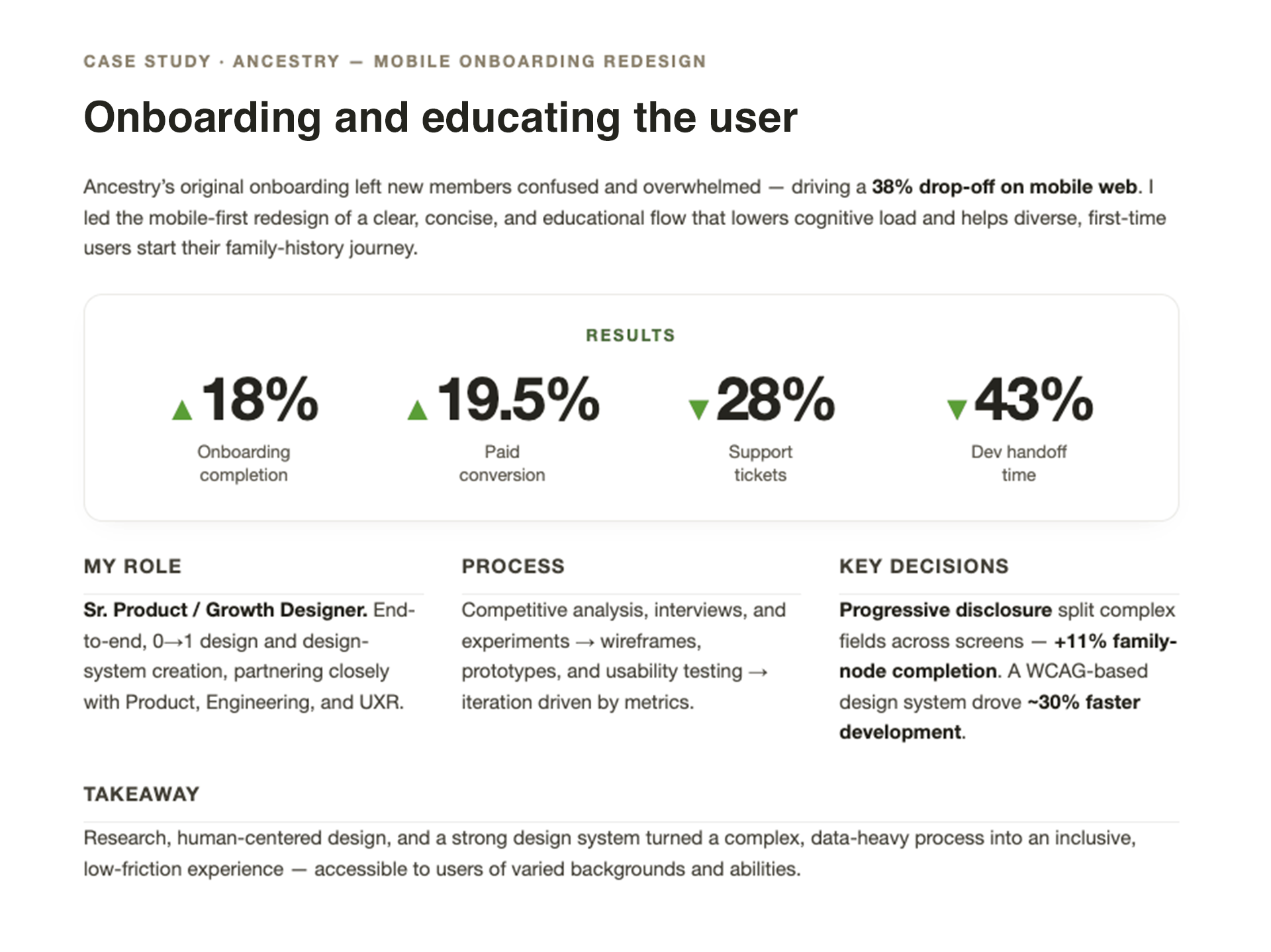
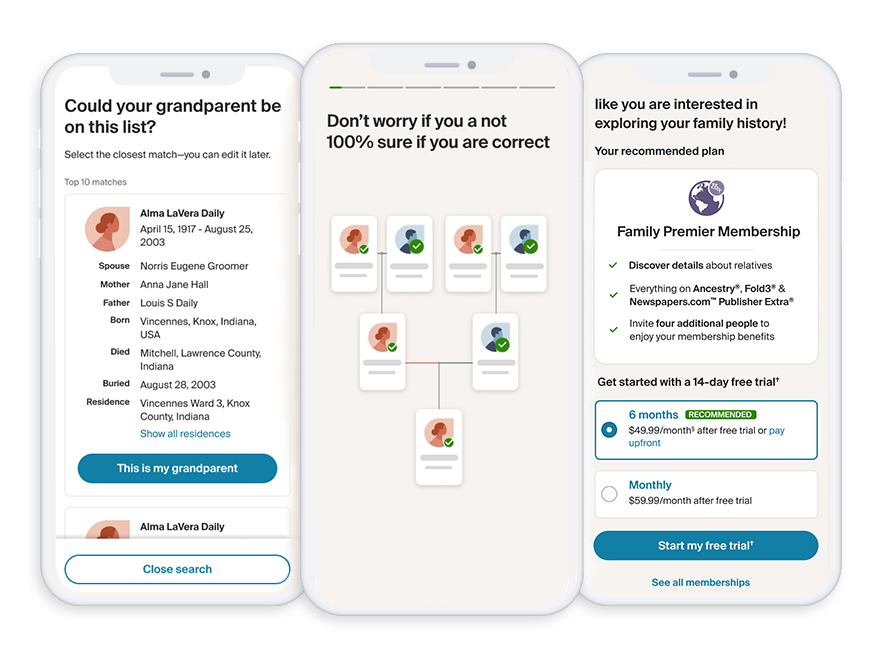
Challenge: Ancestry’s onboarding felt overwhelming. Complex family history inputs caused a 38% drop-off, especially on mobile. Inconsistent design created friction and slowed delivery.
Results: Onboarding completion: +18%. Paid conversion: +19.5%. Support tickets: -28% Dev handoff time: -43%.
Goal: Design an accessible, intuitive onboarding flow that reduces cognitive load and helps diverse users — including newcomers and mobile-first visitors — successfully start their family history journey.
My Role: End-to-end UX ownership: research, journey mapping, design system creation, prototyping, testing, and launch. Collaborated closely with product, engineering, and research teams.
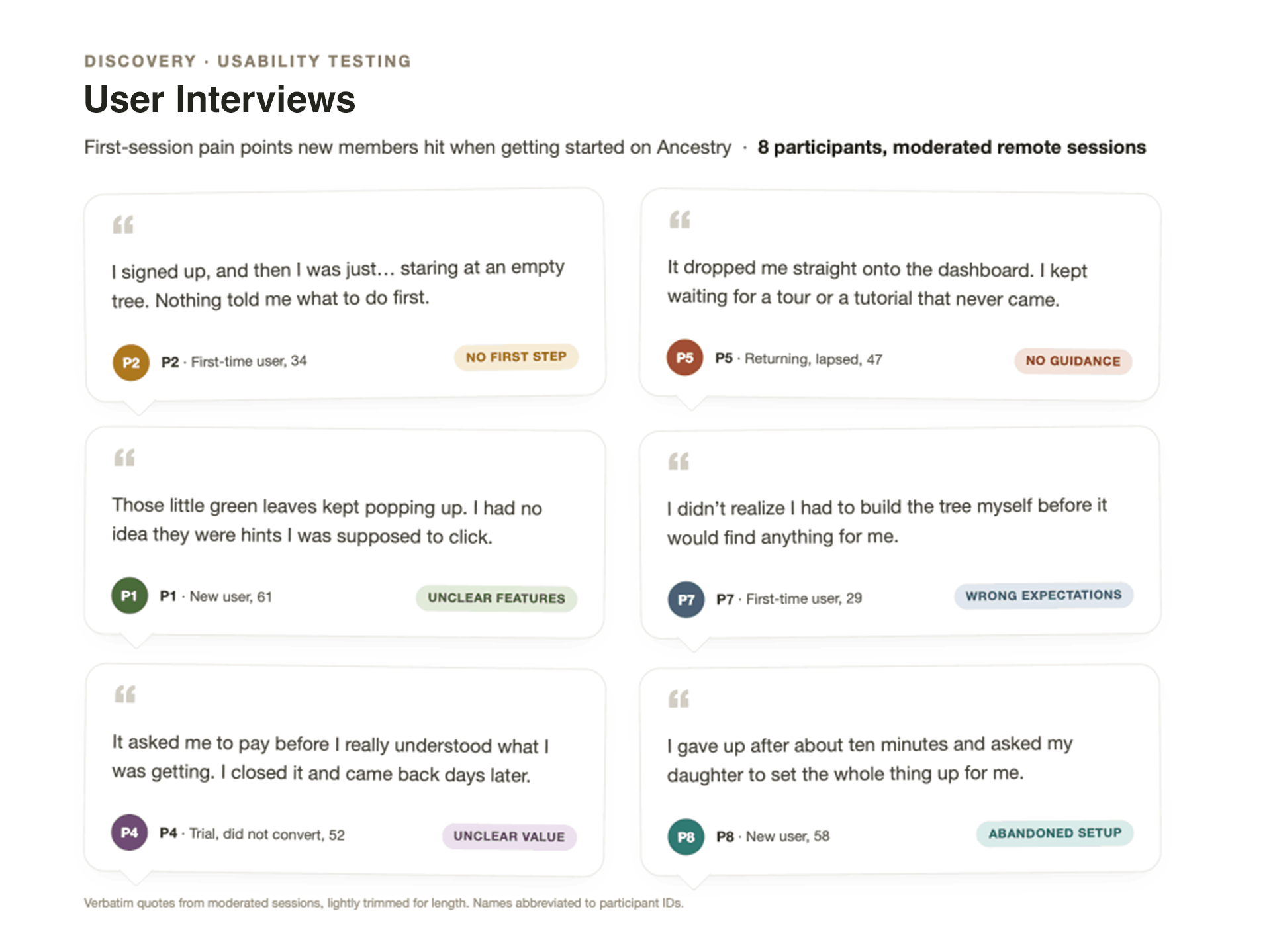
Process: Conducted user interviews, competitive analysis, and journey mapping. Iterated prototypes in 2-week agile sprints with regular usability testing and A/B experiments. Built a scalable Figma design system with 43 reusable components based on consistent, accessible patterns.
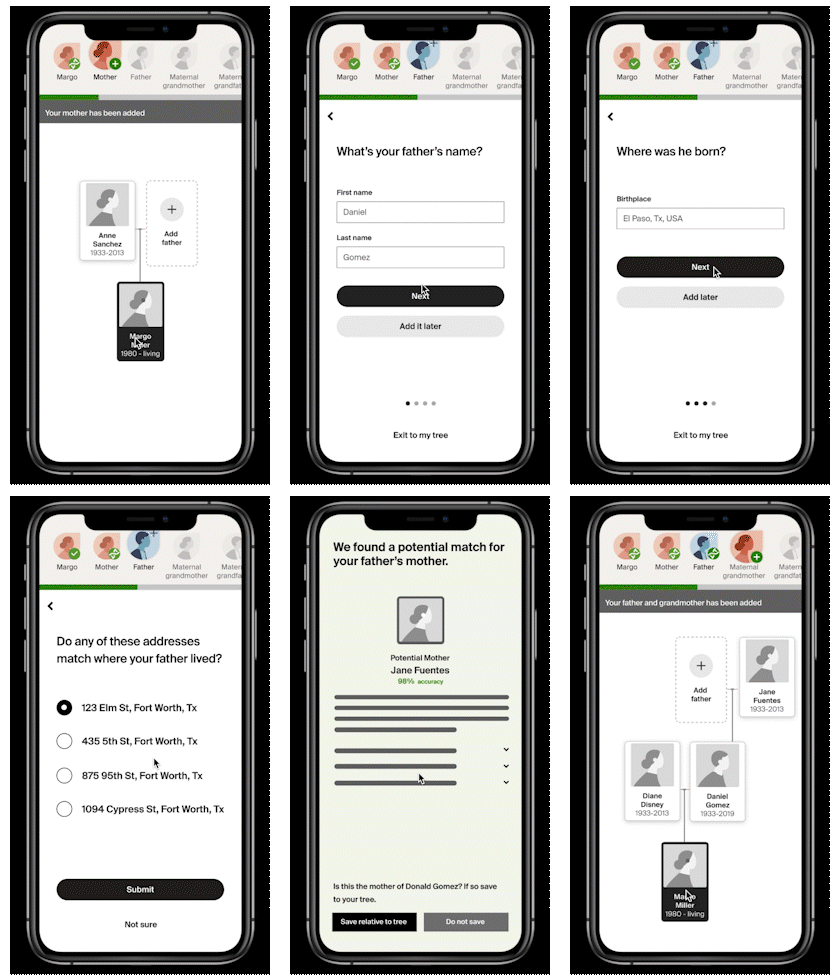
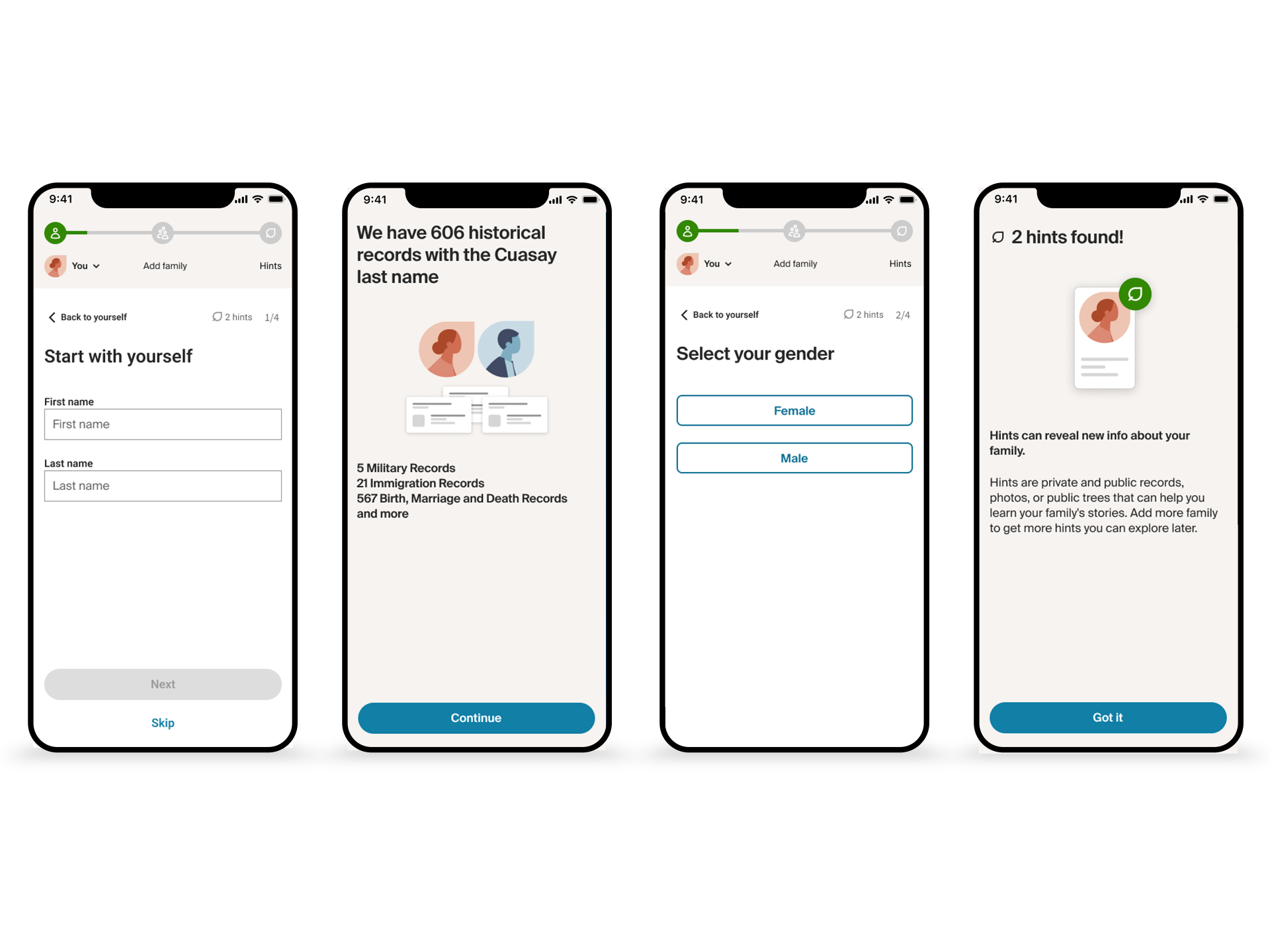
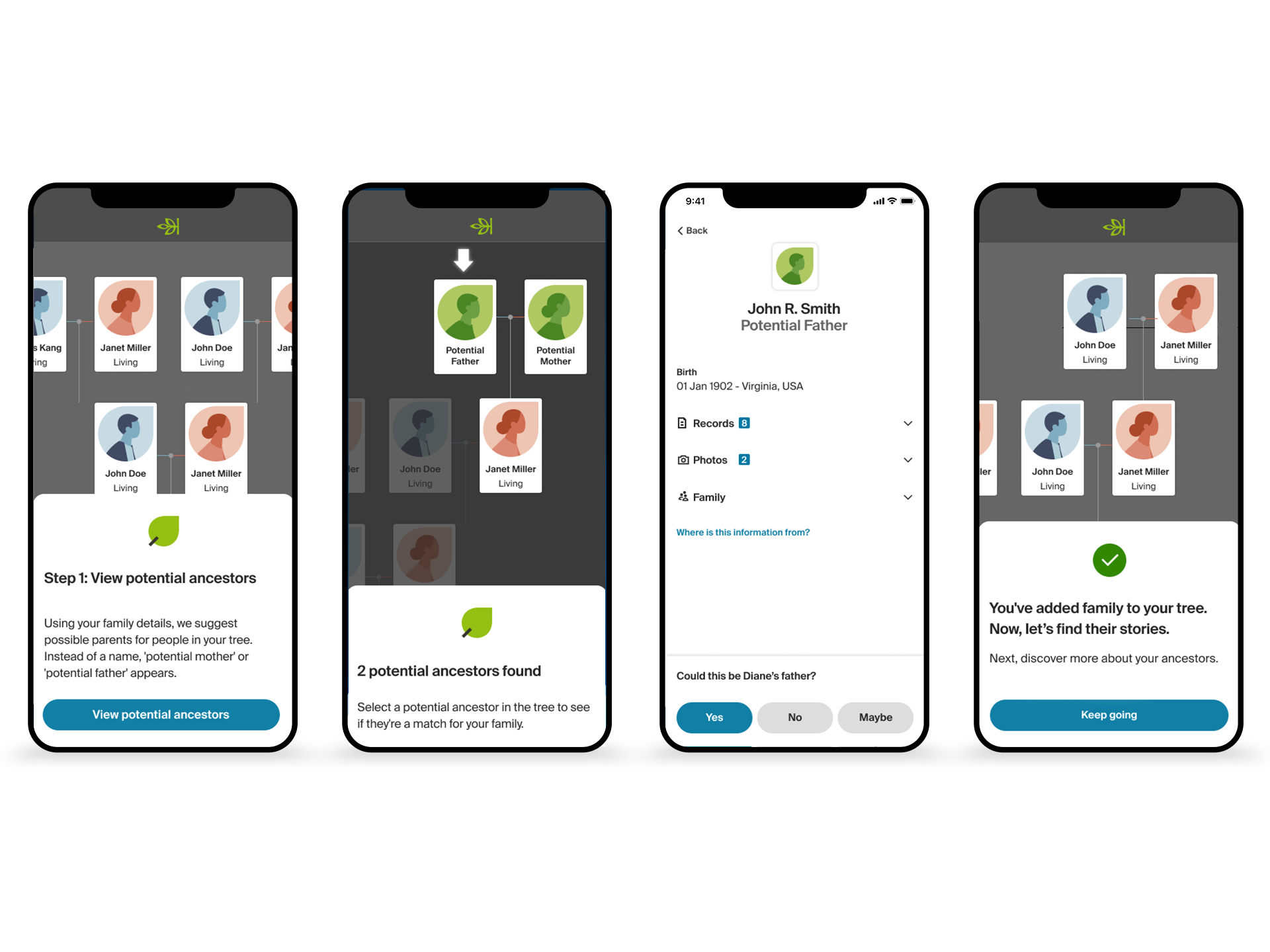
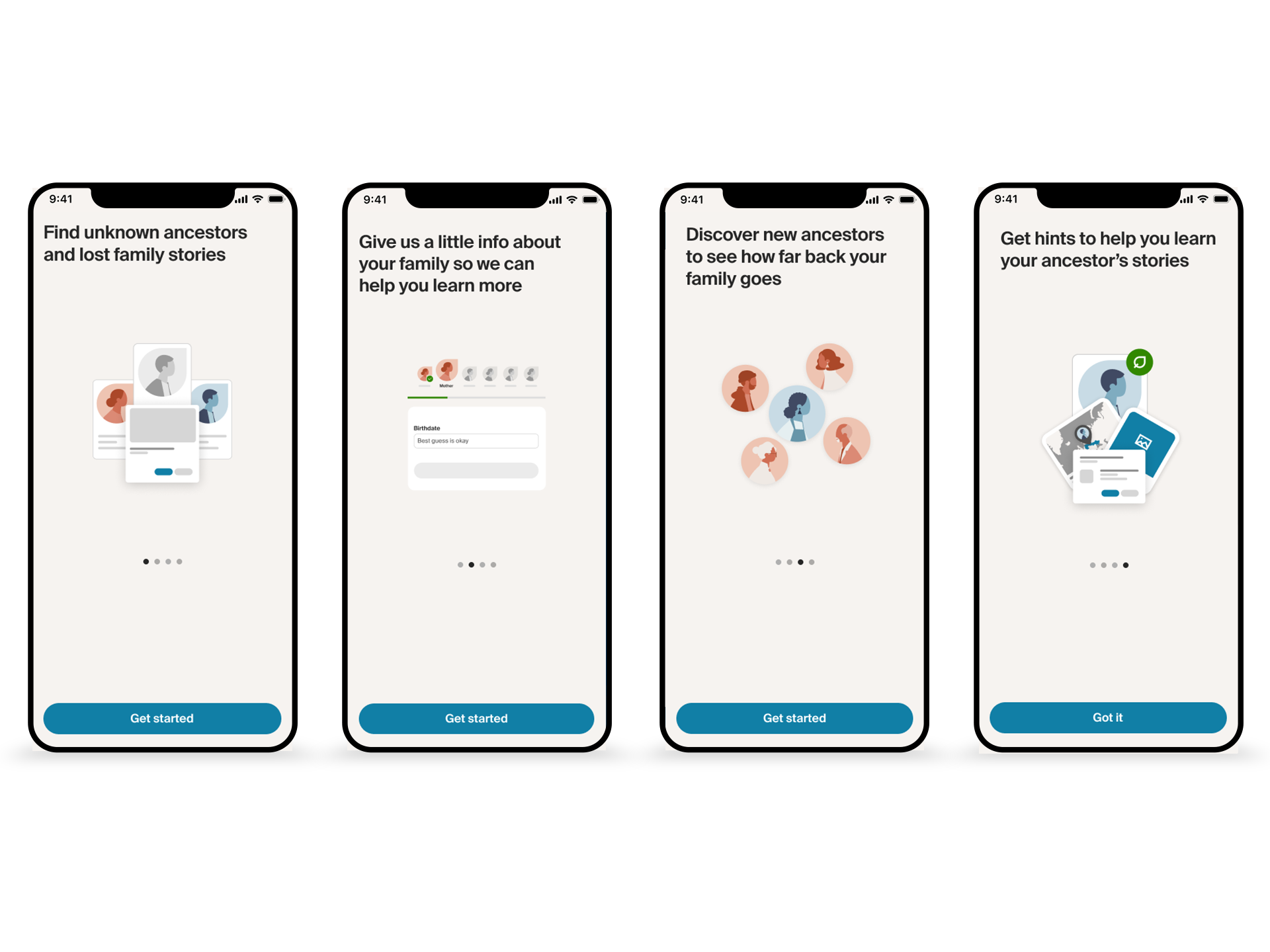
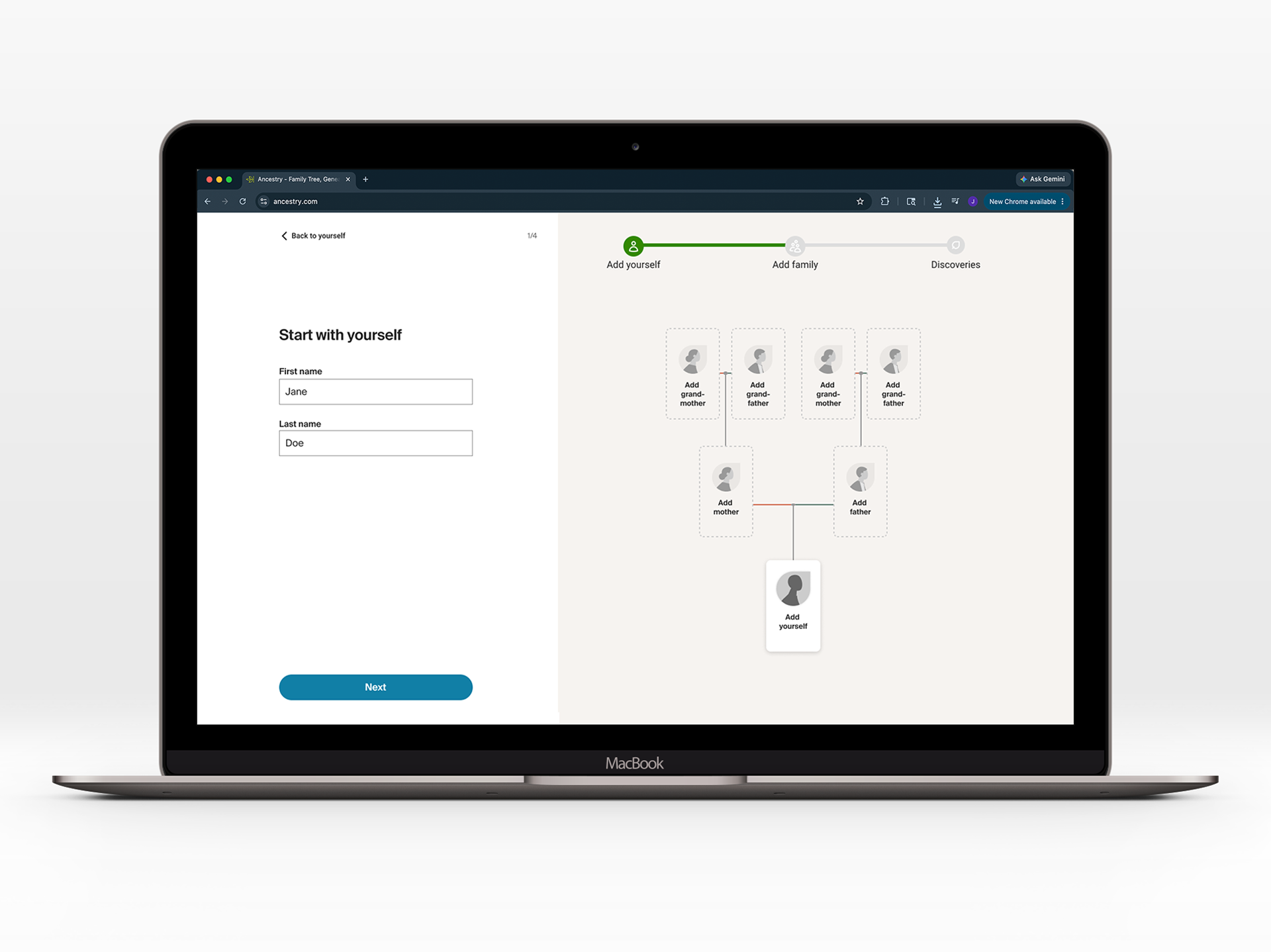
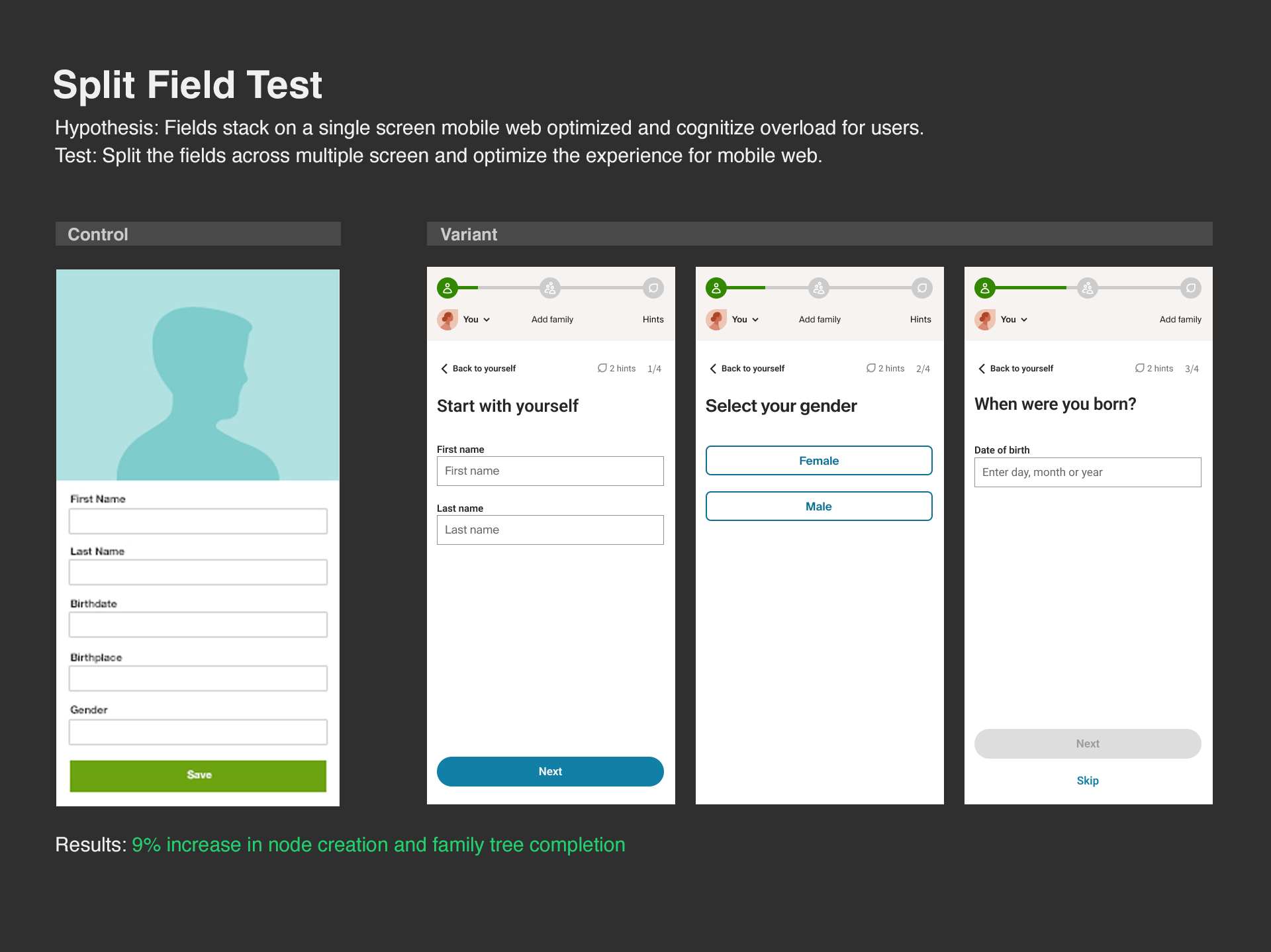
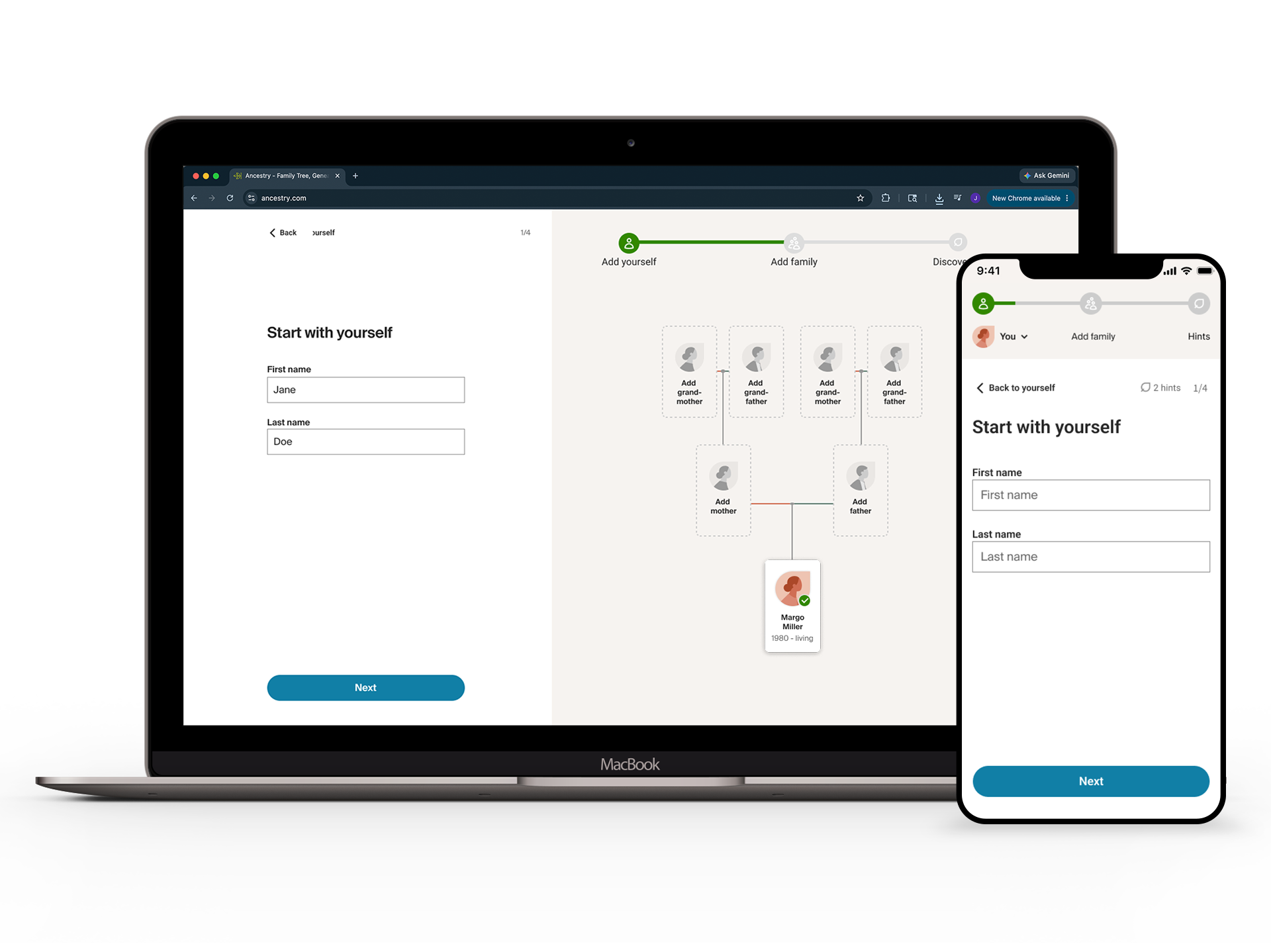
Key Design Decisions: Progressive disclosure Split complex fields across screens → +11% family node completion. Clear value propositions and communication using Human Centered Design to build trust. Scalable design system driving consistency and accelerated development by ~30% and improved handoff efficiency.
Approach & Takeaways: This project showed how human-centered design and a strong design system can simplify complex, data-heavy processes into inclusive, low-friction experiences. The result: more users from varied backgrounds and abilities could easily access essential information about their family history through through team work, iteration, testing and the pursuit of metrics.
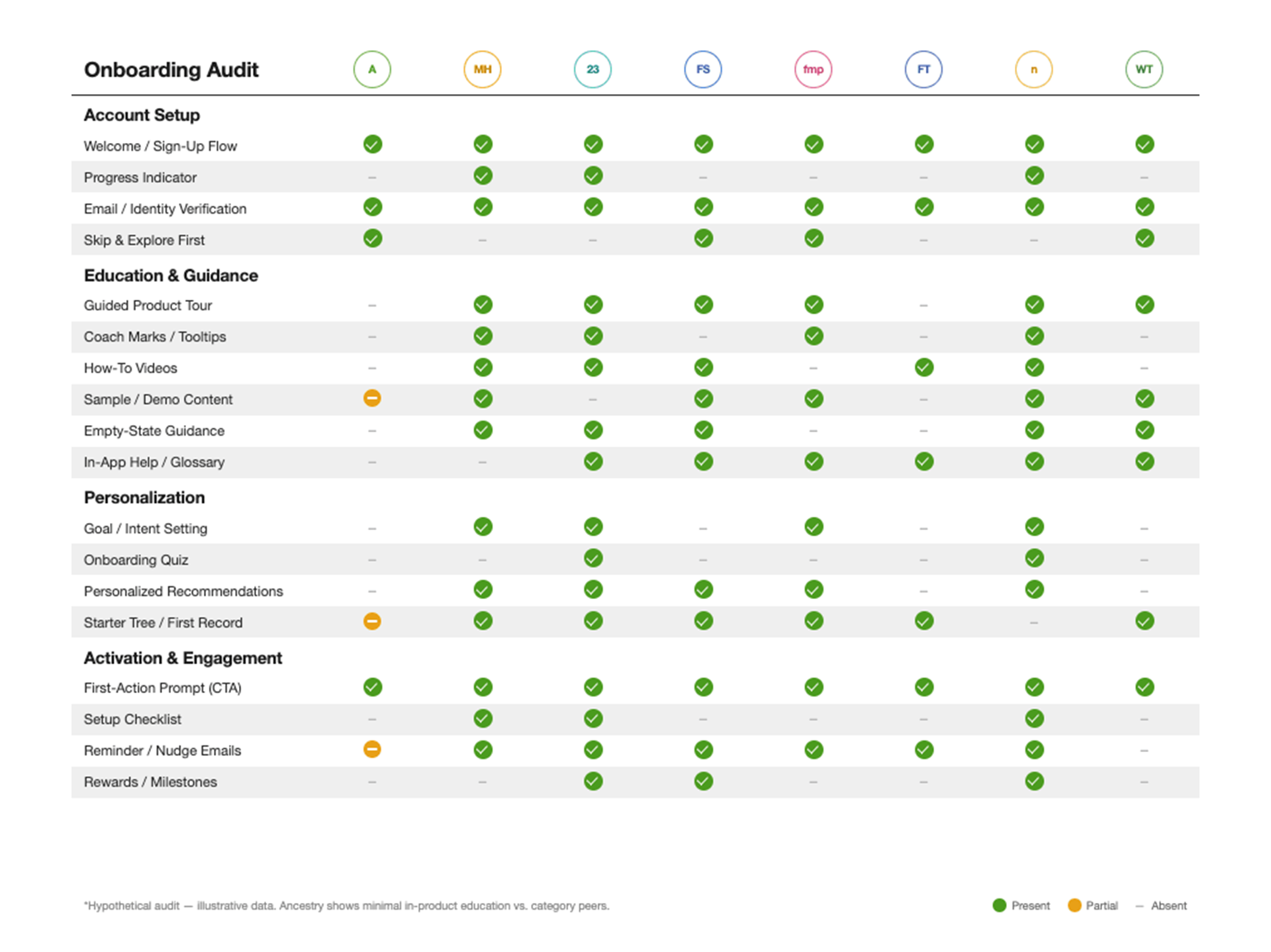
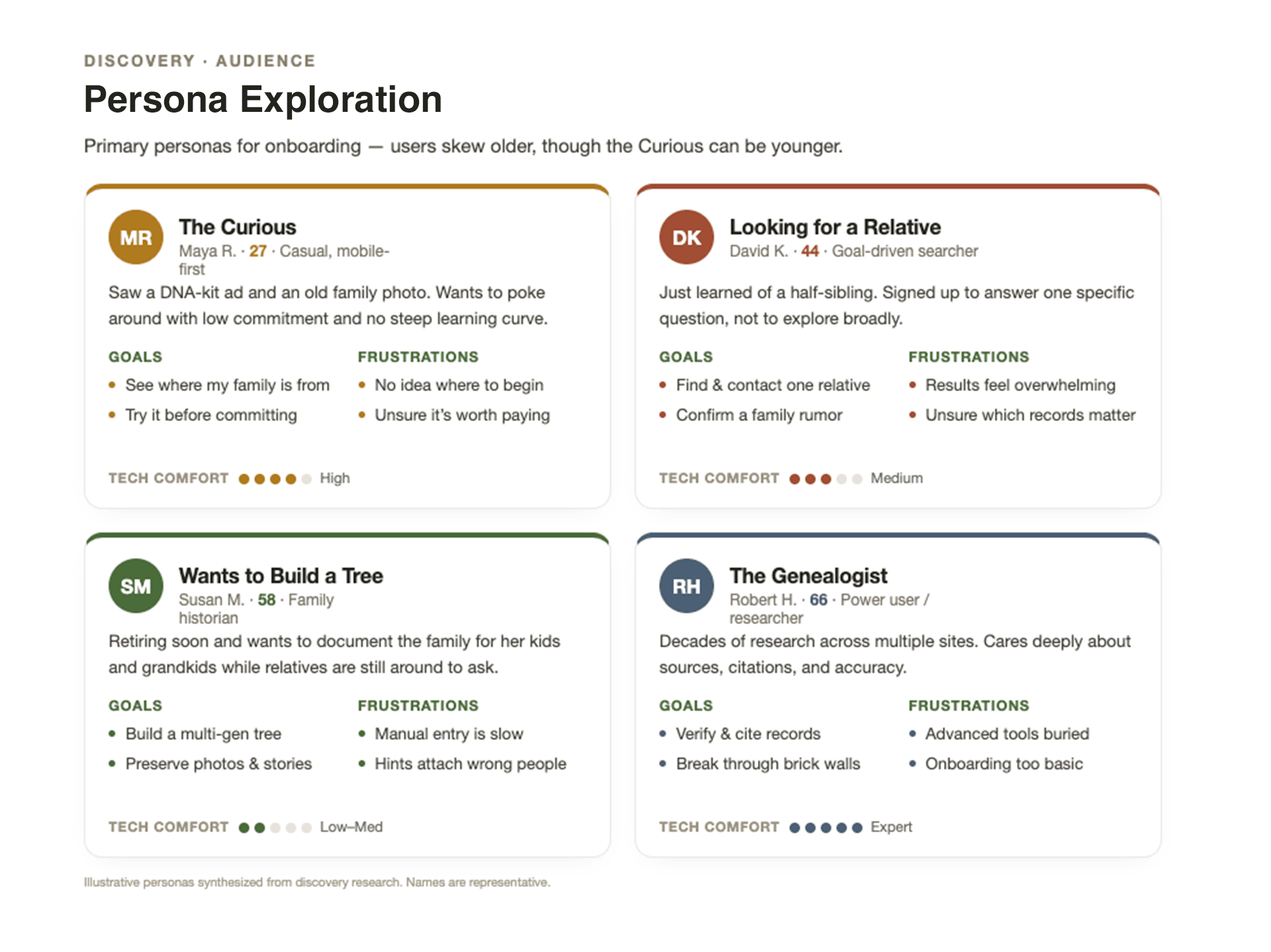
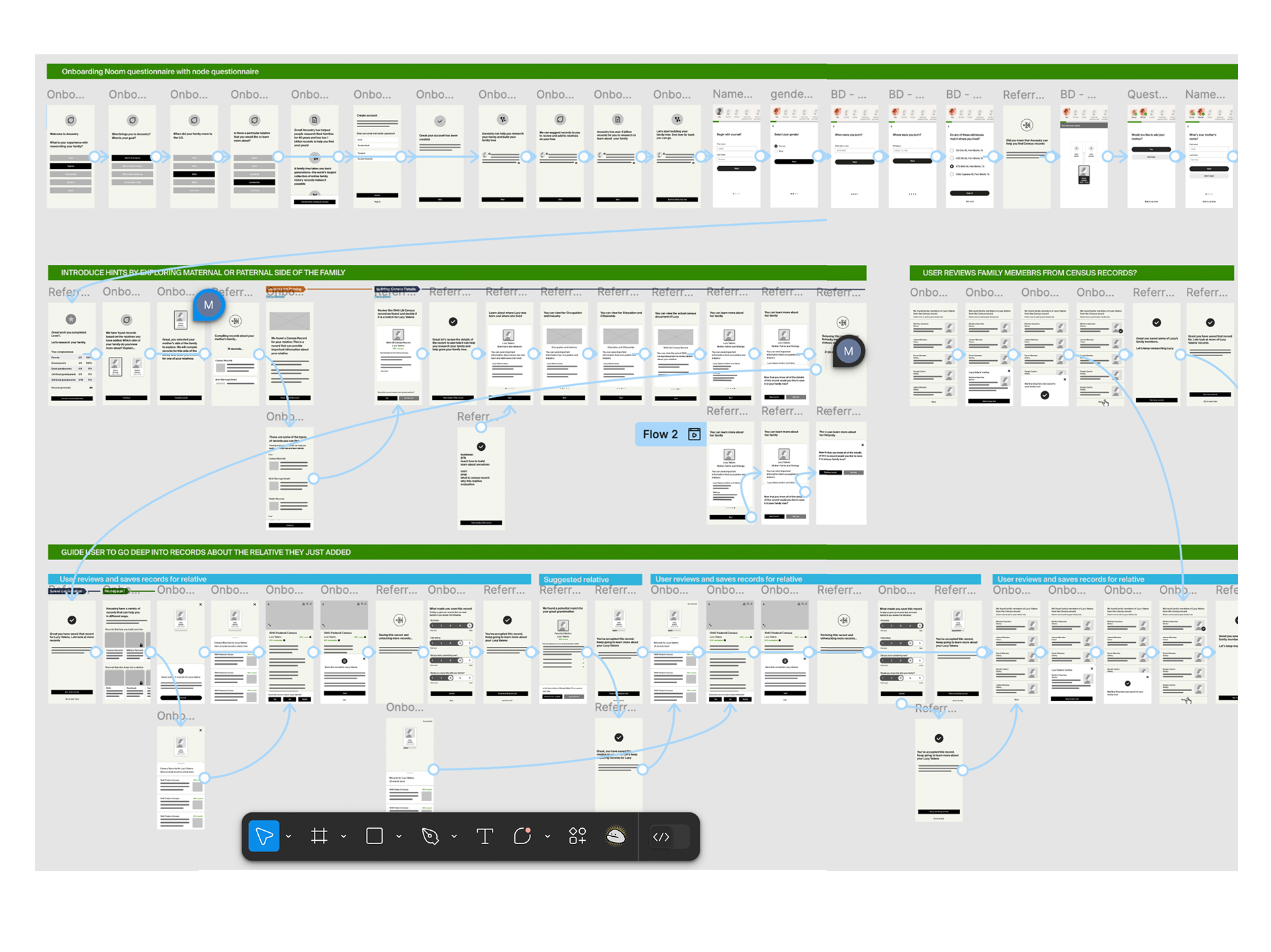
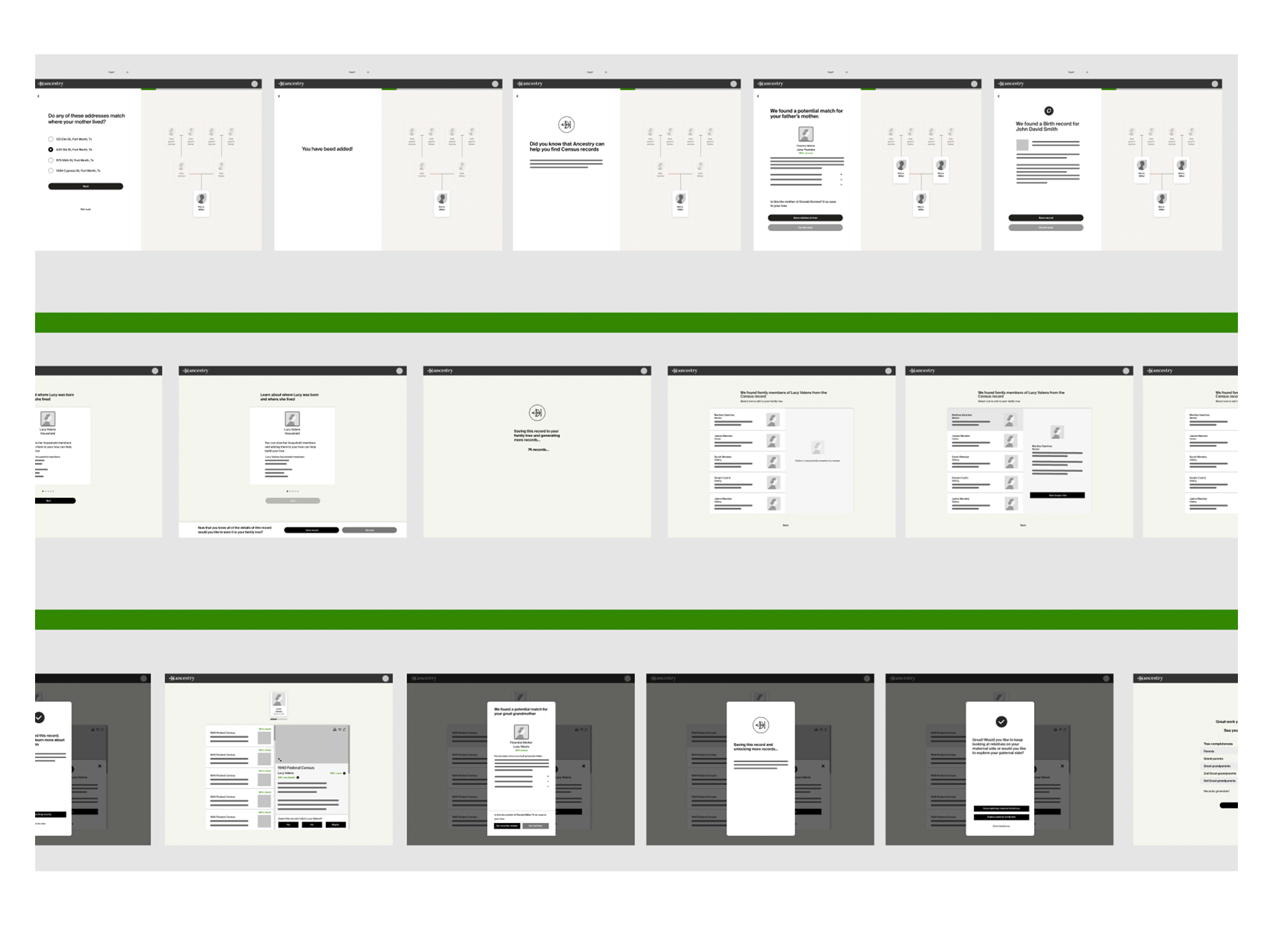
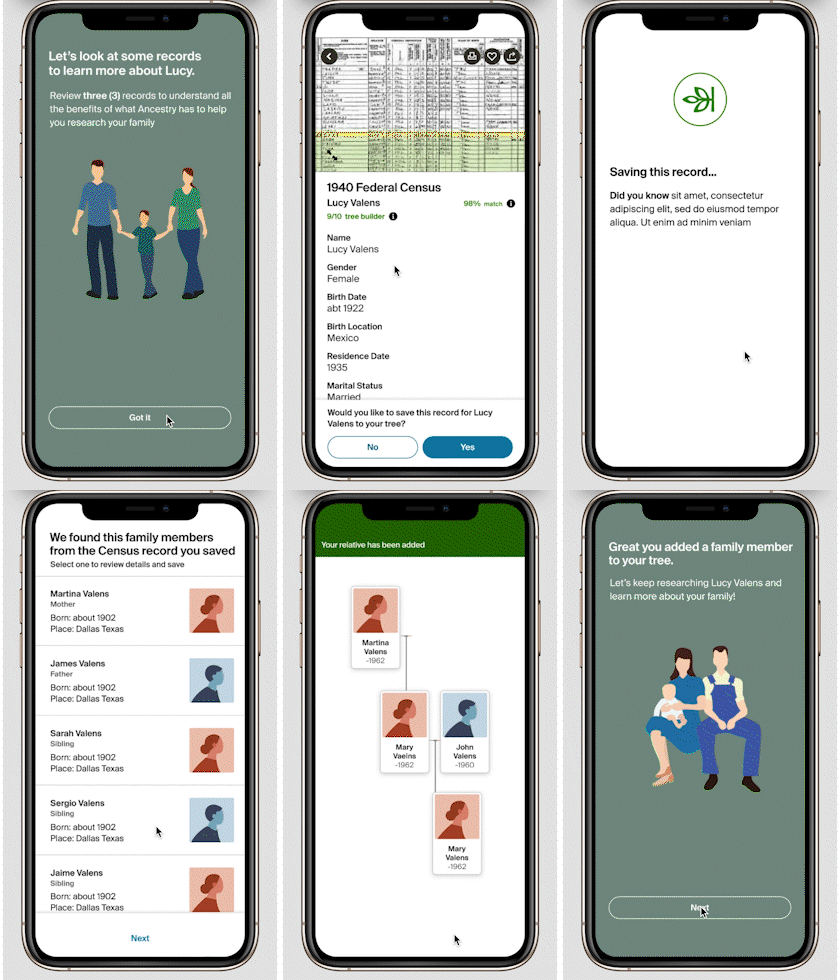
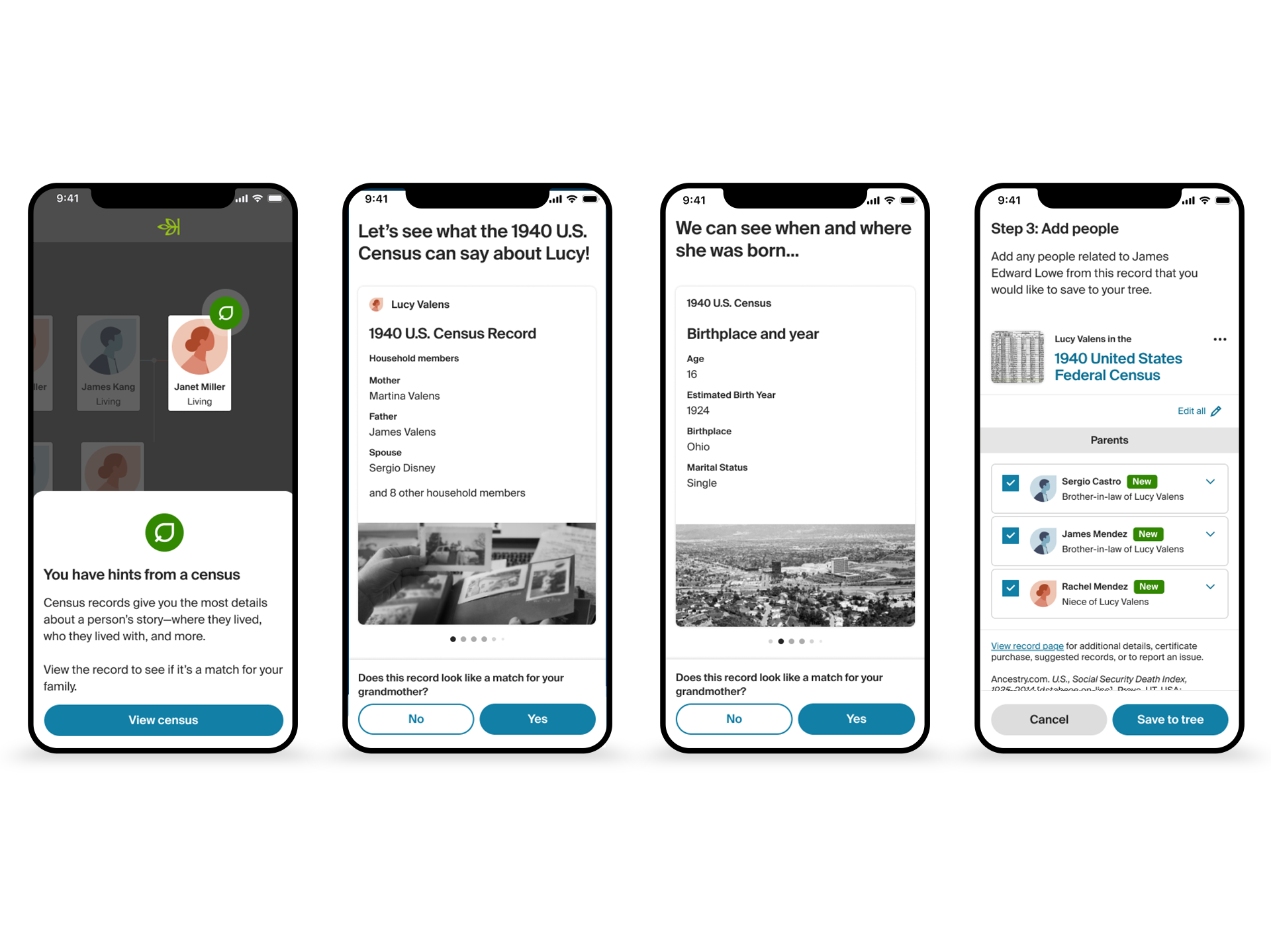
INITIAL STEPS: The growth team was tasked with building Ancestry's first true onboarding experience. We began by creating User Personas and laying out the User Journey for users who were getting started on Ancestry. After conducting competitive analysis leadership decided on a long form onboarding, modeled after Noom's experience. I then began wireframes for blue sky thinking and prototypes for testing initial design concepts focusing on mobile web first design. Ancestry's product at this point was not optimized for mobile web.
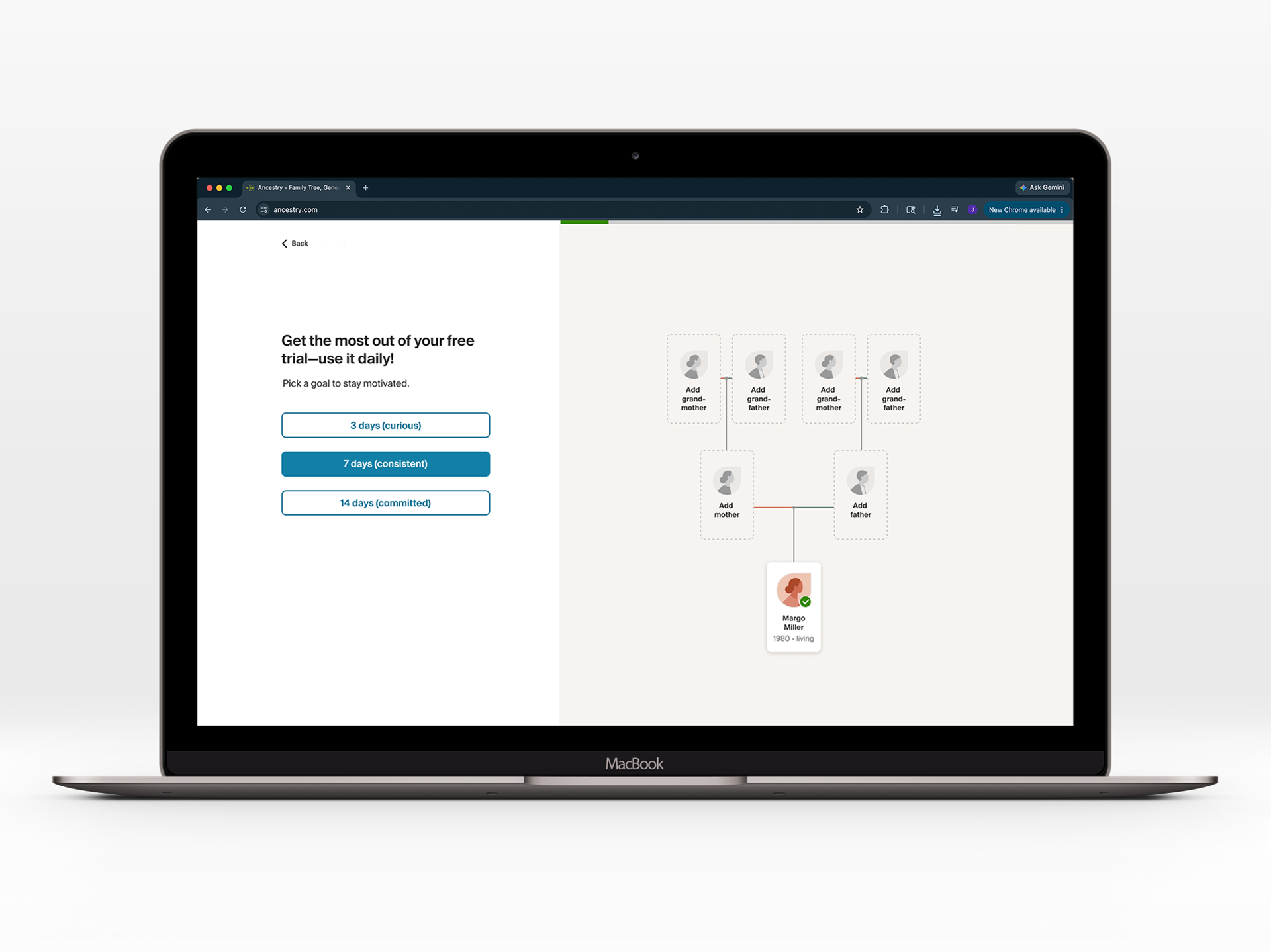
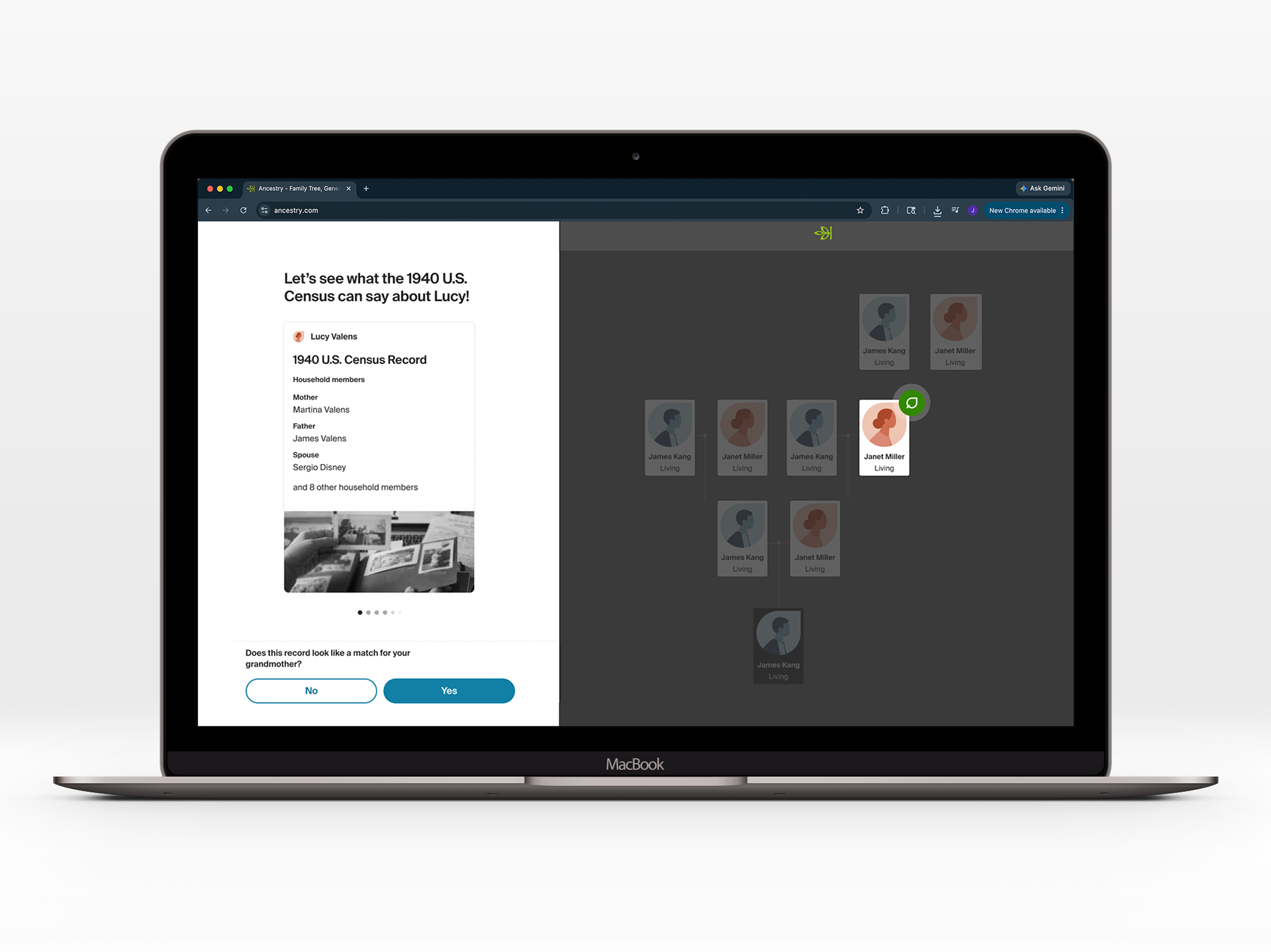
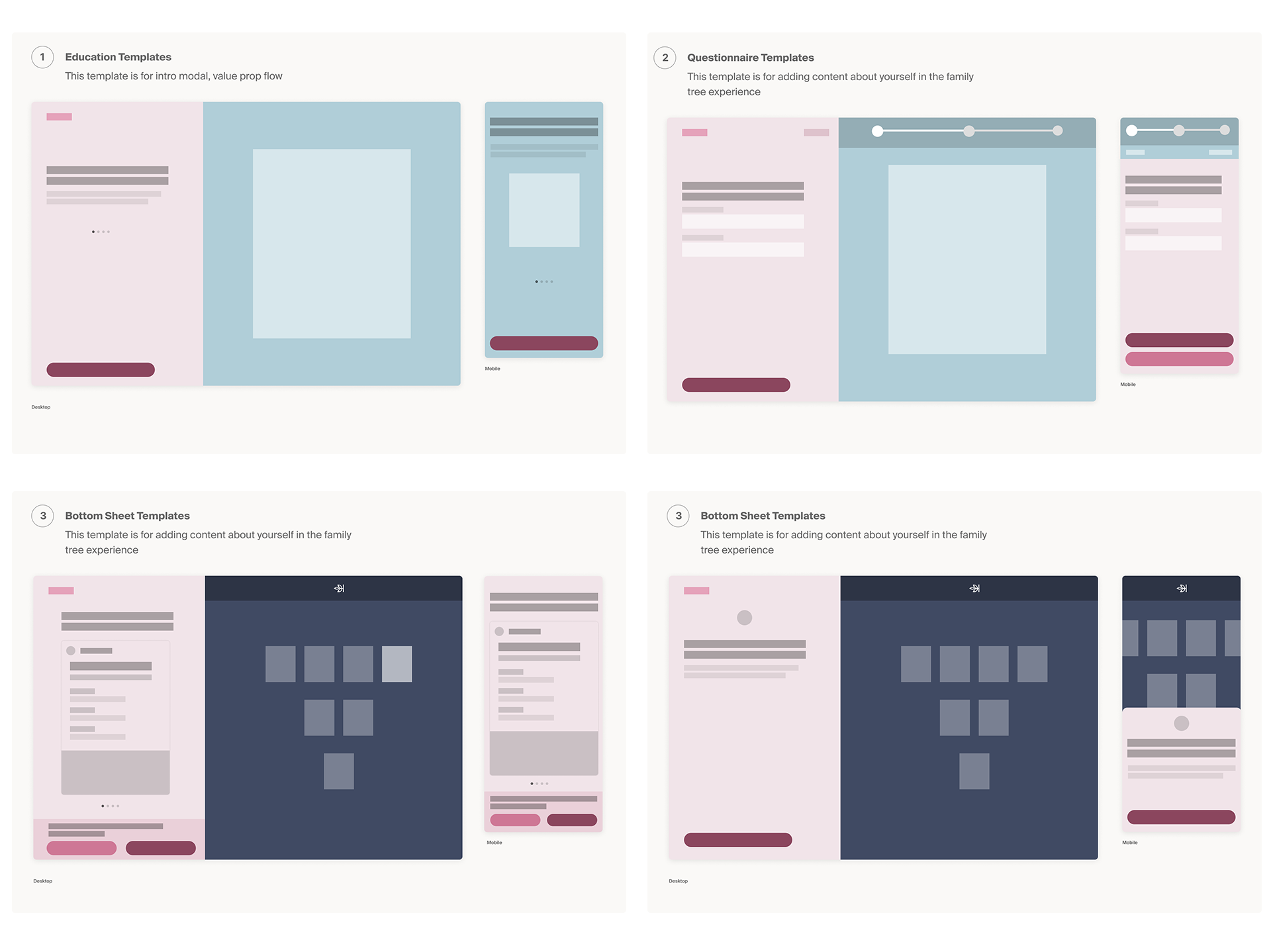
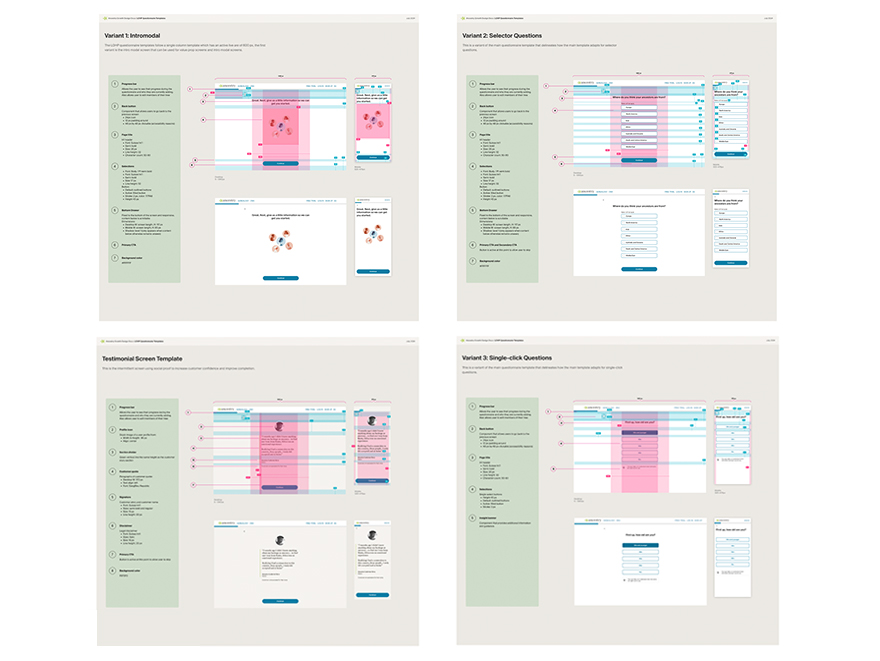
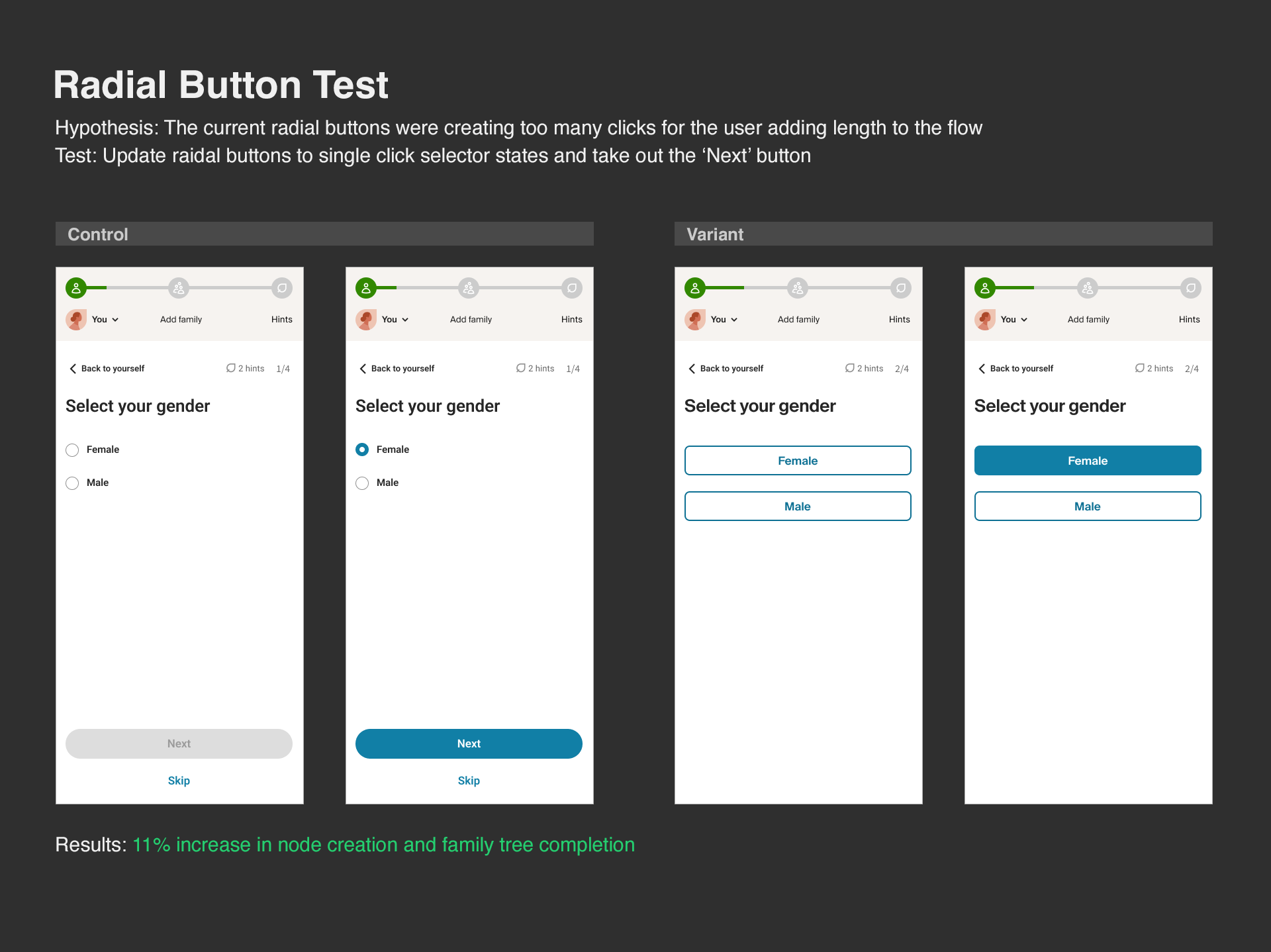
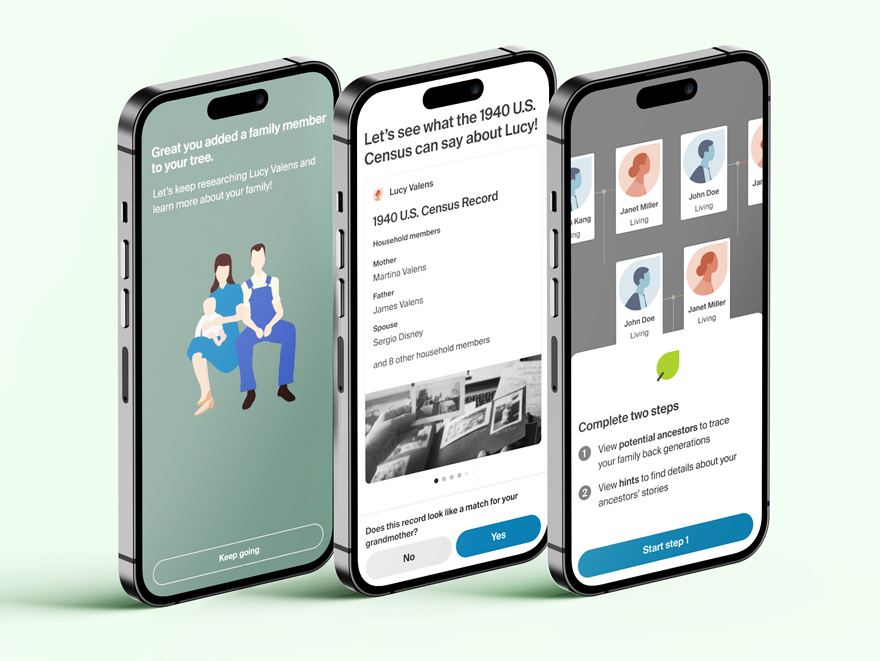
PROTOTYPES AND UI: Low to high fidelity prototypes helped us test initial design and flow concepts. We made fields and buttons standard with material design and WCAG principles, split up questions across multiple screens, added progressive disclosure of family records and hints and added value prop screens to explain key features of the flow. All of this was proving positive with users. Prototypes are fun but also bring your ideas to life to better understand what resonates with users and gets alignment with stakeholders.
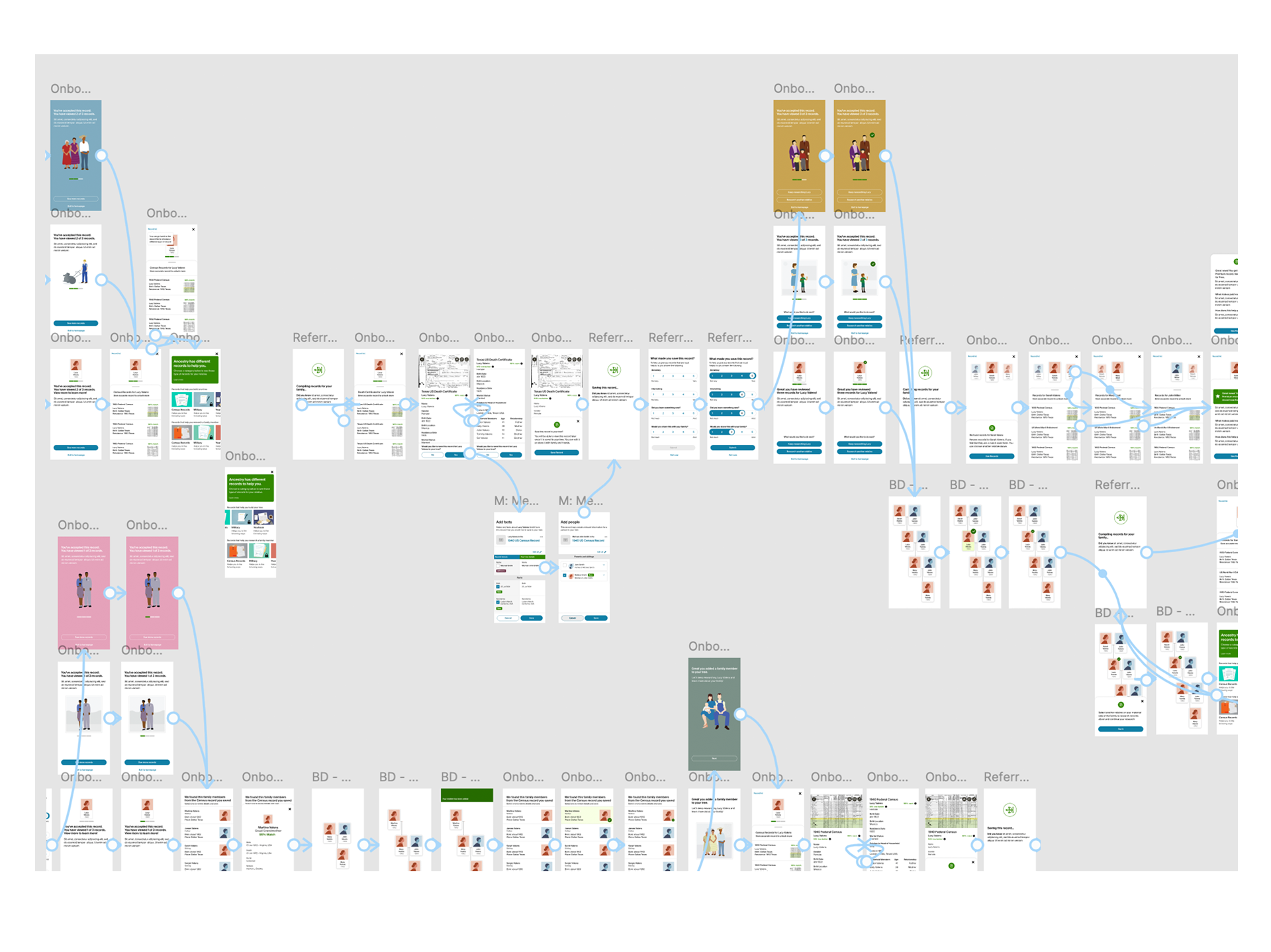
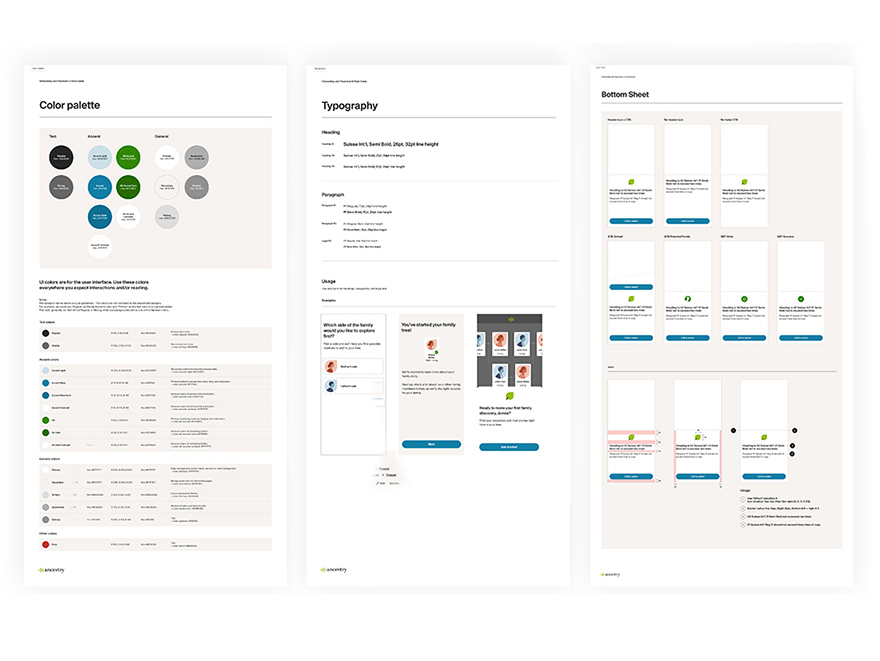
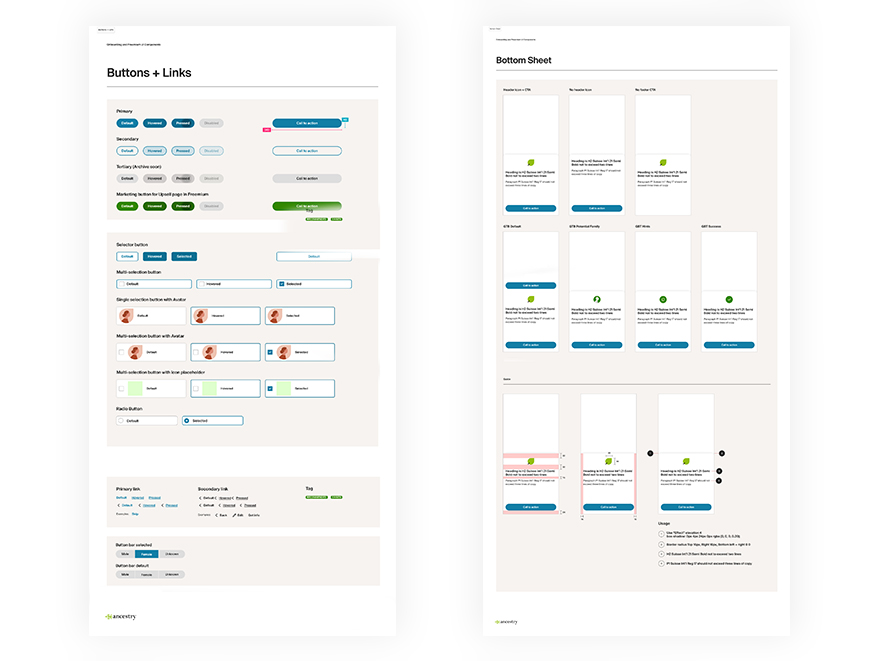
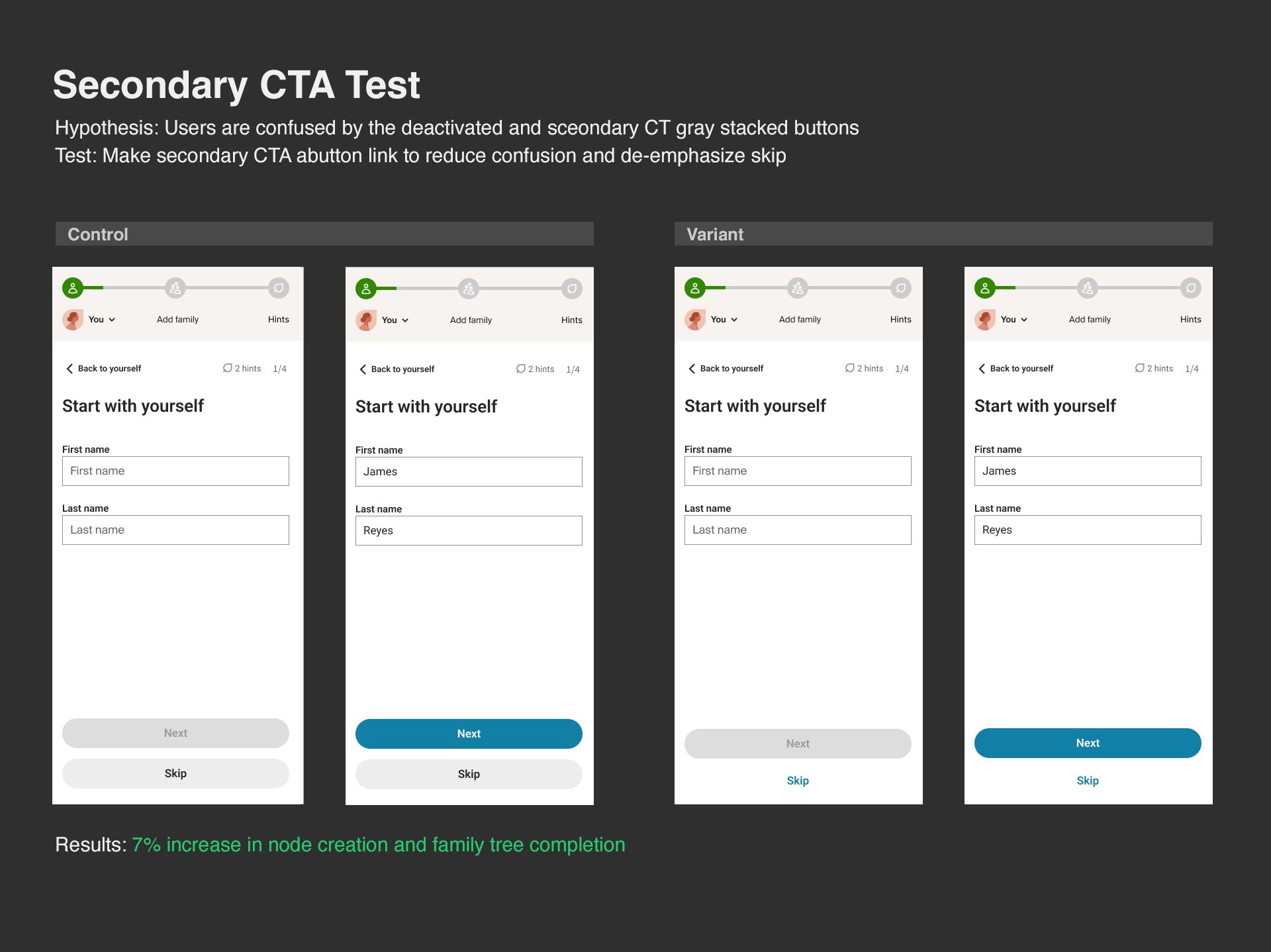
DESIGN SYSTEM: As designs matured, we established a living style guide and scalable design system. We dramatically reduced the company's color palette and font usage for better consistency. We introduced key new components—including single-click buttons, bottom sheets, progress bars and toast notifications—among many others leveraging WCAG principles for Ancestry's diverse and slightly older user base. We locked in polished designs for rigorous user testing and iteration. My core focus: deliver a clean, cohesive, and extensible system + style guide that made the experience more accessible to all users on web and mobile web and that teams across the company could adopt and build on reliably.
FINAL DESIGN: Designs and flows were relentlessly tested on a two week sprint basis with the goal of improving onboarding completion, conversion and engagement through user interviews, A/B tests, experimentation and iteration. If the numbers were not right we iterated until we got them right. The goal ws to build a scalable system that aligned with a clean code base that allowed us, as a team, to design and develop quickly and iterate efficiently to hit company KPIs. The simplicity in design was intentional leveraging Human Centered Design principles.
RESULTS: As a team (Product, Design and Dev) we achieved a +18% in onboarding completion and 19.5% paid conversion lift. Our Growth team worked like a start up within a large company. We moved fast and moved the needle. That's how I approached my work at Ancestry. I work best when I contribute in a large ways for companies and show great empathy for the user. Fun stuff!